



From the Mayor: "The Structure of Gratitude" by David Brooks
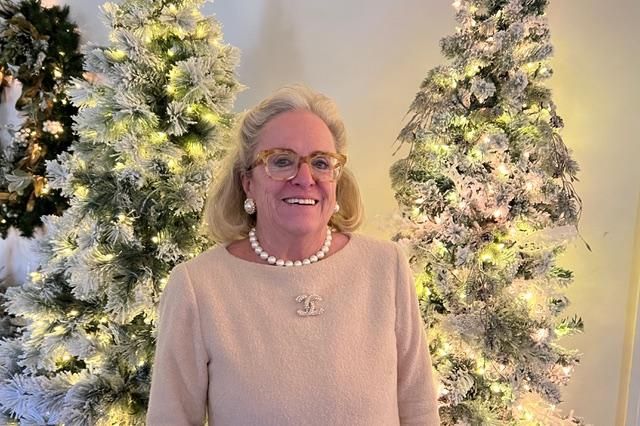
By Mary Marvin, Mayor of Bronxville
Dec. 17, 2025: As the year comes to a close and we turn blessedly to share holidays with family and friends, I thought perhaps opportune to share with you my all time favorite column – so much so that I keep a miniaturized copy in my wallet to stave off the occasional “woe is me.”
The Structure of Gratitude by David Brooks
I’m sometimes grumpier when I stay at a nice hotel. I have certain expectations about the service that’s going to be provided. I get impatient if I have to crawl around looking for a power outlet, if the shower controls are unfathomable, if the place considers itself too fancy to put a coffee machine in each room. I’m sometimes happier at a budget motel, where my expectations are lower, and where a functioning iron is a bonus and the waffle maker in the breakfast area is a treat.
This little phenomenon shows how powerfully expectations structure our moods and emotions, none more so than the beautiful emotion of gratitude.
Gratitude happens when some kindness exceeds expectations, when it is undeserved. Gratitude is a sort of laughter of the heart that comes about after some surprising kindness.
Most people feel grateful some of the time — after someone saves you from a mistake or brings you food during an illness. But some people seem grateful dispositionally. They seem thankful practically all of the time.
These people may have big ambitions, but they have preserved small anticipations. As most people get on in life and earn more status, they often get used to more respect and nicer treatment. But people with dispositional gratitude take nothing for granted. They take a beginner’s thrill at a word of praise, at another’s good performance or at each sunny day. These people are present-minded and hyperresponsive.
This kind of dispositional gratitude is worth dissecting because it induces a mentality that stands in counterbalance to the mainstream threads of our culture.
We live in a capitalist meritocracy. This meritocracy encourages people to be self-sufficient — masters of their own fate. But people with dispositional gratitude are hyperaware of their continual dependence on others. They treasure the way they have been fashioned by parents, friends and ancestors who were in some ways their superiors. They’re glad the ideal of individual autonomy is an illusion because if they were relying on themselves they’d be much worse off.
The basic logic of the capitalist meritocracy is that you get what you pay for, that you earn what you deserve. But people with dispositional gratitude are continually struck by the fact that they are given far more than they pay for — and are much richer than they deserve. Their families, schools and summer camps put far more into them than they give back. There’s a lot of surplus goodness in daily life that can’t be explained by the logic of equal exchange.
Capitalism encourages us to see human beings as self-interested, utility-maximizing creatures. But people with grateful dispositions are attuned to the gift economy where people are motivated by sympathy as well as self-interest. In the gift economy intention matters. We’re grateful to people who tried to do us favors even when those favors didn’t work out. In the gift economy imaginative empathy matters. We’re grateful because some people showed they care about us more than we thought they did. We’re grateful when others took an imaginative leap and put themselves in our mind, even with no benefit to themselves.
Gratitude is also a form of social glue. In the capitalist economy, debt is to be repaid to the lender. But a debt of gratitude is repaid forward, to another person who also doesn’t deserve it. In this way each gift ripples outward and yokes circles of people in bonds of affection. It reminds us that a society isn’t just a contract based on mutual benefit, but an organic connection based on natural sympathy — connections that are nurtured not by self-interest but by loyalty and service.
If you think that human nature is good and powerful, then you go around frustrated because the perfect society has not yet been achieved. But if you go through life believing that our reason is not that great, our individual skills are not that impressive, and our goodness is severely mottled, then you’re sort of amazed life has managed to be as sweet as it is. You’re grateful for all the institutions our ancestors gave us, like the Constitution and our customs, which shape us to be better than we’d otherwise be. Appreciation becomes the first political virtue and the need to perfect the gifts of others is the first political task.
We live in a capitalist meritocracy that encourages individualism and utilitarianism, ambition and pride. But this society would fall apart if not for another economy, one in which gifts surpass expectations, in which insufficiency is acknowledged and dependence celebrated.
Gratitude is the ability to see and appreciate this other almost magical economy. G. K. Chesterton wrote that “thanks are the highest form of thought, and that gratitude is happiness doubled by wonder.”
People with grateful dispositions see their efforts grandly but not themselves. Life doesn’t surpass their dreams but it nicely surpasses their expectations.
Just in the past few weeks, the generosity of spirit, time and dedication has been exhibited as I offer you the following vignettes, which are just the tip of the iceberg of why gratitude is an should be so prevalent in our Village.
-Residents donated an unprecedented amount of food during our recent Village wide food drive with every barrel overflowing every single day.
-Our Village Administrator Jim Palmer was driving people at 2:15 AM on the night of the Rivermere fire to the Tuckahoe Motel so they would have a place to stay and our Building Inspector Kevin Doyle cancelled his vacation so as to expedite the return of folks to the undamaged apartments. (As I receive more verified information, I will be sharing with you the heroics of our fire department, police department and the wonderful residents of Rivermere saving the lives of our neighbors).
-When called upon to help our neighbors in Mount Vernon after their fire, our Police Department only had to put out one e-alert and we received donations filling six pickup trucks of coats in less than an afternoon to deliver to our neighbors in need.
On the younger generation front, our football team went up to their state championship game earlier than planned as the team wanted to show their support for our neighboring Tuckahoe team who was playing the day before in the afternoon and they sat in the stand to cheer on the Tuckahoe Tigers.
Personally, I am truly grateful every day to have the honor and the privilege to serve as your Mayor.


Government & History Directory
Bronxville is a quaint village (one square mile) located just 16 miles north of midtown Manhattan (roughly 30 minutes on the train) and has a population of approximately 6,500. It is known as a premier community with an excellent public school (K-12) and easy access to Manhattan. Bronxville offers many amenities including an attractive business district, a hospital (Lawrence Hospital), public paddle and tennis courts, fine dining at local restaurants, two private country clubs and a community library.
While the earliest settlers of Bronxville date back to the first half of the 18th century, the history of the modern suburb of Bronxville began in 1890 when William Van Duzer Lawrence purchased a farm and commissioned the architect, William A. Bates, to design a planned community of houses for well-known artists and professionals that became a thriving art colony. This community, now called Lawrence Park, is listed on the National register of Historic Places and many of the homes still have artists’ studios. A neighborhood association within Lawrence Park called “The Hilltop Association” keeps this heritage alive with art shows and other events for neighbors.
Bronxville offers many charming neighborhoods as well as a variety of living options for residents including single family homes, town houses, cooperatives and condominiums. One of the chief benefits of living in “the village” is that your children can attend the Bronxville School.
The Bronxville postal zone (10708, known as “Bronxville PO”) includes the village of Bronxville as well as the Chester Heights section of Eastchester, parts of Tuckahoe and the Lawrence Park West, Cedar Knolls, Armour Villa and Longvale sections of Yonkers. Many of these areas have their own distinct character. For instance, the Armour Villa section has many historic homes and even has its own newsletter called “The Villa Voice” which reports on neighborhood news.
Link to Village of Bronxville One Square Mile Monthly Newsletter
Village of Bronxville Administrative Offices
337-6500
Open 9:00am - 4pm excluding holidays and weekends
Bronxville Police Department
337-0500
Open 24 hours
Bronxville Parking Violations
337-2024
Open 9:00am - 4pm excluding holidays and weekends
Bronxville Fire Deparment
793-6400
Government & History Recent Articles










Quick Links
Newsletter
MyhometownBroxnville reserves the right to monitor and remove all comments. For more information on Posting Rules, please review our Rules and Terms of Use, both of which govern the use and access of this site. Thank you.
The information presented here is for informational purposes only. While every effort has been made to present accurate information, myhometownBronxville, LLC, does not in any way accept responsibility for the accuracy of or consequences from the use of this information herein. We urge all users to independently confirm any information provided herein and consult with an appropriate professional concerning any material issue of fact or law. The views and opinions expressed by the writers, event organizers and advertisers do not necessarily represent those of myhometownBronxville, LLC, its officers, staff or contributors. The use of this website is governed by the Terms of Use . No portion of this publication may be reproduced or redistributed, either in whole or part, without the express written consent of the publisher.
Copyright © 2009 myhometownbronxville.com, All rights reserved.